
TIRE TIPS // MAINTENANCE
Tire Pressure in Cold Weather
THE SHORT ANSWER
Tire pressure falls about 1 psi for every 5°C drop in temperature, so a warm October afternoon turning into a minus fifteen morning takes several psi out of every tire. Set them cold to the number on the placard inside your driver's door, and check them monthly through the winter.
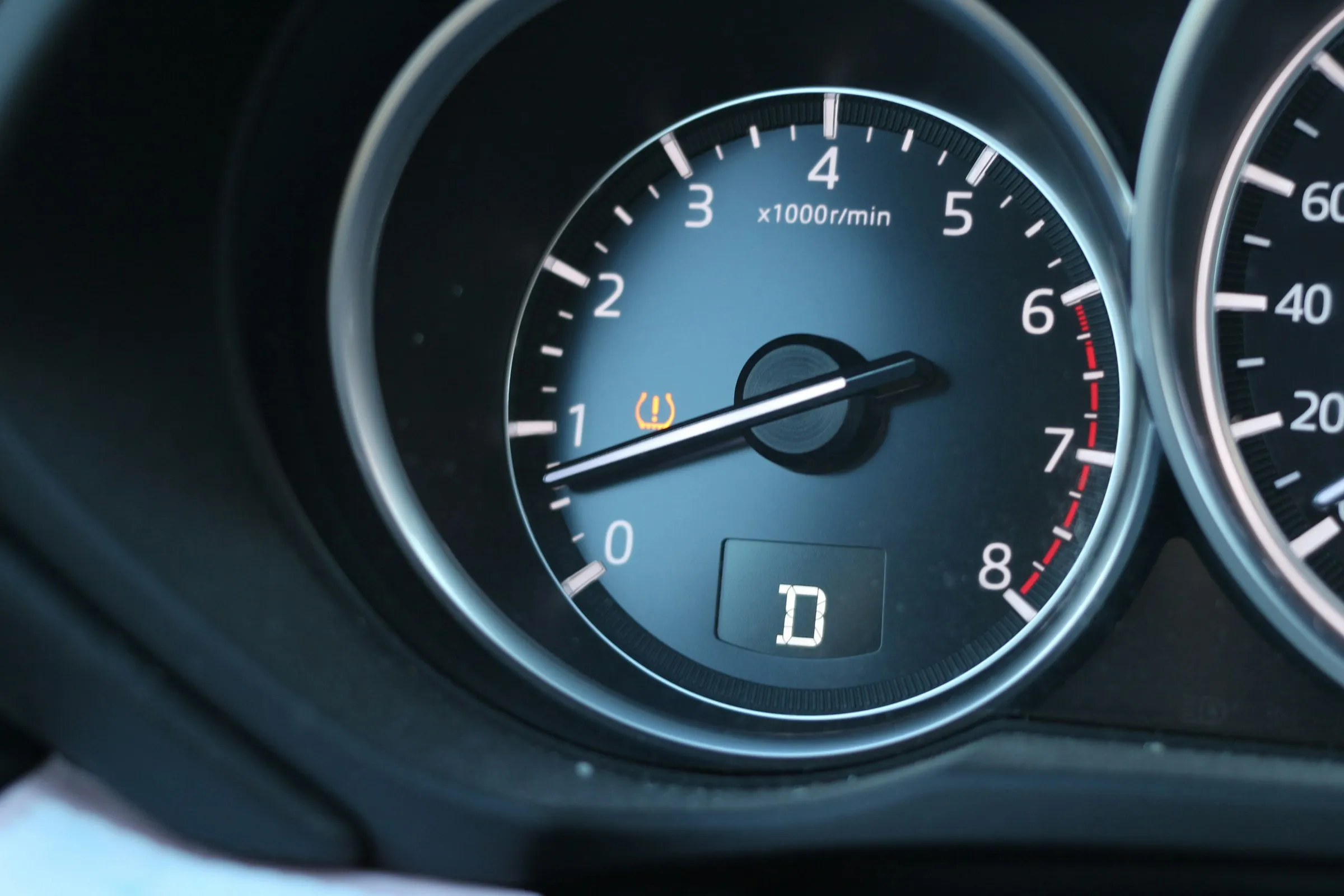
The number behind the light
Air contracts as it cools. Transport Canada puts the working figure at about 7 kPa, roughly 1 psi, for every 5°C drop in temperature.
Do the arithmetic on an Alberta autumn. You set your pressures on a pleasant plus fifteen afternoon in October. Three weeks later you walk out to minus fifteen. That is thirty degrees, which is about six psi gone from every tire, and a tire that was at 35 psi is now sitting at 29.
Nothing leaked. The tires are simply cold. This is why the entire Foothills gets a dashboard light on the same morning every November, and why the shop phone rings all day.
Where to find your number
The placard inside the driver's door jamb lists the cold inflation pressures your vehicle was designed around, front and rear, sometimes with a separate figure for a loaded vehicle.
That is the number. The figure moulded into the tire sidewall is the tire's maximum, not your target, and setting to it gives you a hard ride, a worn centre strip and less grip.
Cold means cold: before the vehicle has been driven, or at least three hours after. Driving heats the air and adds several psi, so a pressure set at a warm gas station after a highway run will be low the next morning.
What underinflation actually costs
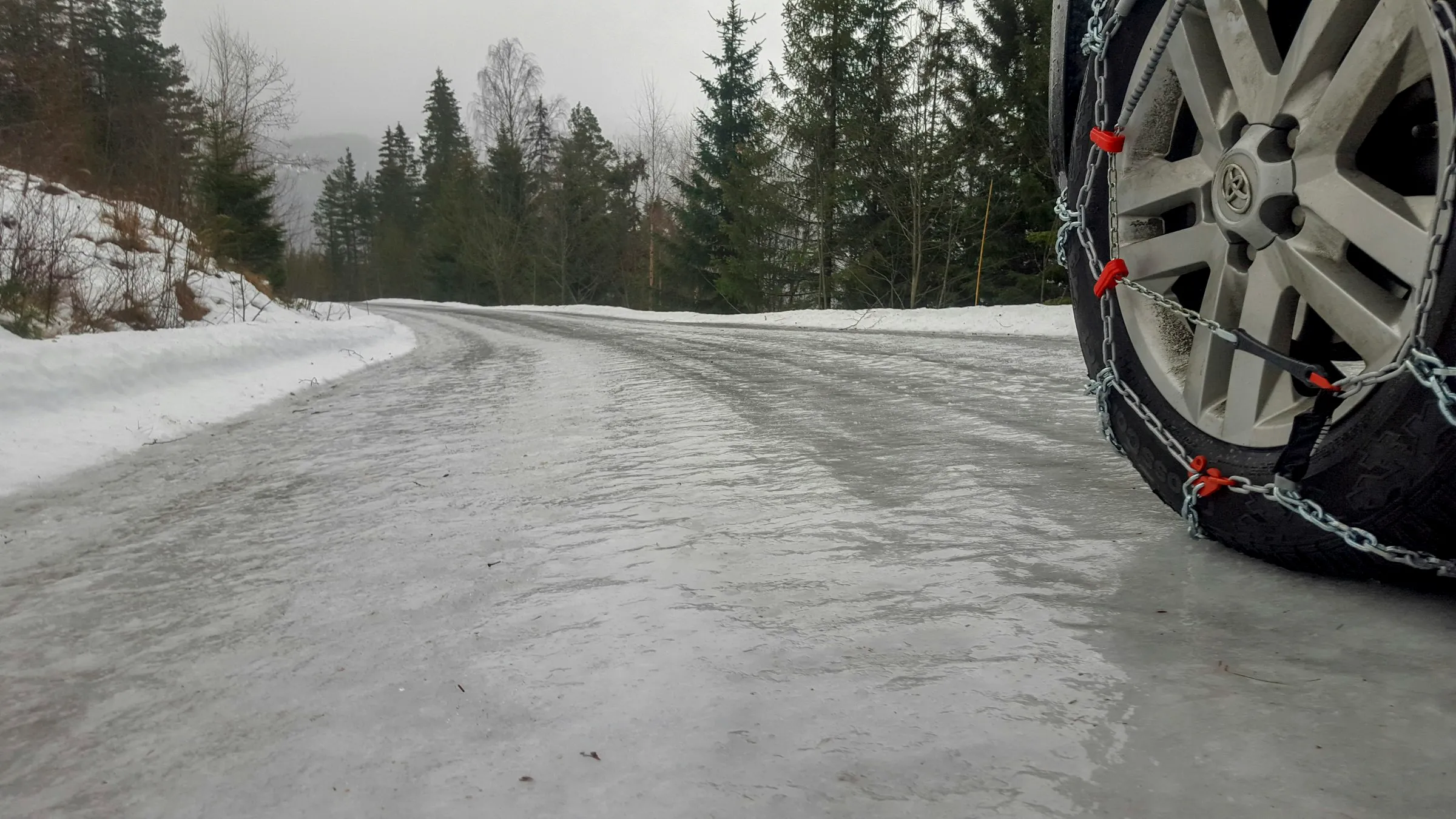
Grip first. An underinflated tire rolls onto its shoulders, which changes the contact patch and blunts turn-in and braking, on ice worst of all.
Then wear. Chronic low pressure wears both shoulders and leaves the centre, and it can take thousands of kilometres off a set.
Then fuel. Low pressure raises rolling resistance, and the effect across four tires is measurable over a winter of commuting to Calgary.
Then heat, which is the dangerous one at highway speed. An underinflated tire flexes more, flexing makes heat, and heat is what destroys a tire on a long run. That is the mechanism behind most highway blowouts, and it is why trailer tires deserve a check before every trip.
Overinflation has its own costs: a harsh ride, a centre-worn tread and less grip, because the contact patch is smaller than it was designed to be.
What TPMS does and does not tell you
Most vehicles built in the last fifteen years carry a tire pressure monitoring system. Direct systems use a sensor inside each wheel. Indirect systems infer a low tire from wheel speed through the ABS sensors, which means they detect a soft tire but cannot tell you a number.
Two limits are worth knowing. Transport Canada notes that some systems warn only when a tire is significantly underinflated, at which point the tire may already be close to failure, so the light is a late alarm rather than an early one. And large temperature swings set the light off on their own, which in chinook country happens several times a winter.
Treat the light as an instruction to check all four with a gauge, not as a measurement. A five dollar gauge in the glovebox is still the most useful tire tool anyone owns.
Sensors themselves have a life. The batteries are sealed in and typically last five to ten years, and the service kits, the little seals and valve cores, want replacing when a tire is dismounted. That is what a TPMS service covers, and it is why a sensor sometimes dies during a changeover rather than because of one.
A winter routine that takes five minutes
Check pressures monthly, and always after a big temperature swing. In the Foothills that means after every chinook, in both directions.
Check them cold, first thing in the morning, at home rather than after a drive to the station.
Set to the placard, not to what is in the tire now and not to the sidewall maximum.
Do the spare, if you have one. Spares are usually the softest tire on the vehicle and are only ever needed at the worst moment.
Watch the pattern. If one tire always needs more, it is not the weather, it is a leak, and most of them are repairable.
Nitrogen, and the honest version
Nitrogen migrates through rubber a little more slowly than air and holds pressure a bit more steadily across temperature swings, mostly because it is dry and carries no water vapour. That is a real if modest benefit, and it is why we offer nitrogen fills.
It is not a substitute for checking your pressures. Air is 78 percent nitrogen already, and a tire filled with nitrogen still loses pressure when it gets cold. Anyone selling it as a way to never check your tires again is selling you something else.
Quick answers
Why did my light come on with no leak? Cold. About 1 psi per 5°C, so a hard overnight drop pulls several psi out of every tire.
Can I just add air until the light goes out? Add air until the gauge reads the placard number, then the light should clear after a short drive. Do not chase the light past the correct pressure.
Should I run higher pressure in winter? No. Run the placard pressure, measured cold.
How often should I check? Monthly, and after every big temperature swing.
Do I need to reset the system? Some vehicles relearn on their own after a few minutes of driving, some need a tool. We do the relearn as part of any changeover.
GOOGLE REVIEWS // OKOTOKS & FOOTHILLS
All reviews★★★★★
I called on a Thursday to get three of my four trailer tires replaced. Got booked in for 9:00 a.m. on Saturday. Arrived at 9am and all done by 9:30am. Very fast and efficient. Would highly recommend.
★★★★★
Great service for an excellent price. Would highly recommend these guys!
★★★★★
I struggle to find a place that will work in smaller lawn tractor tires without feeling like I’m inconveniencing the place. These guys are awesome and get shit done !
★★★★★
Great service and care.
★★★★★
Excellent place for tires in Okotoks. Super friendly staff, professionals and great prices.
★★★★★
What a great experience. Fast friendly and decently priced tires for our Kia Sorento. We were in and out in 20 mins and had no issues at all. Highly recommend for tire and service!!
★★★★★
I called in for an issue with my tire. They were very professional and attentive. Service was very quick and my issue was resolved. Great group of people working here and they are the best in town for tires and more.
★★★★★
Completely satisfied, great service. Braeden and Pat were both fantastic to deal with.
★★★★★
Excellent prices, super service and above all a great team of knowledgeable & personable staff. Can't recommend them highly enough.
★★★★★
Absolutely fantastic service. We got a flat tire and they were the closest place so glad it was. Clean shop, honest prices, friendly staff.
★★★★★
Great service, great prices, great business. Highly recommended if you need some new rubber!
★★★★★
This was a great experience. They responded to me fast. Helped me with my enquiry. I recommend them over and over.
★★★★★
I always like to give my business to local family businesses and Rim 2 Rim are a great tire shop. Competitive and friendly efficient staff. Helped me out in a pinch with flat tire at short notice
★★★★★
Got us in during a busy time and very reasonably priced
★★★★★
Awesome experience!! Friendly and fast thanks a lot.
★★★★★
Pat and his team are great. Get you in on time and out quickly. Professional and courteous staff. My go-to for all my tire work!
★★★★★
Owner and staff are always the best. Great service.
★★★★★
Amazing service when conducting my out of province inspection…highly recommended
★★★★★
This place was great to deal with. Got me in within a timely manner!! Great service, guy up front great guy to deal with. I will be going back there!!
★★★★★
Great service and a great price. Would highly recommend.
★★★★★
Fast and professional service from friendly staff. An excellent experience overall.
★★★★★
I had a punctured tired and they helped us out right away! Great service!
★★★★★
Traveling though the area these guys were great when I needed a new trailer tire on my RV, luckily they had the tire in stock and once I brought them the rim service was excellent to get me right back on the road!
★★★★★
This is hands down the best place for tires and service. Their prices beat all places I've been to and the owner is great. All the staff are friendly and very helpful!
★★★★★
Great price for trailer tires had 4 tires changed and was done in 1/2 hour. Will definitely be doing more business with this shop
★★★★★
Great bunch of people and had an awesome experience. Thanks for looking after my 2003 Acura EL, never driven better!
★★★★★
Awesome service, as usual, even though he was booked solid, Pat still managed to squeeze me in for an 'emergency' repair. So grateful - knew I could rely on Rim 2 Rim.
★★★★★
Best tire shop in the area by far. Pat and the crew are the best!! I wouldn't go anywhere else.
FIND US
Located Downtown
Okotoks
7 S Railway St, Okotoks, AB T1S 1A4
By the tracks, serving Okotoks, High River, Calgary and the Foothills.
| MON – THU | 8:00 AM – 5:30 PM |
|---|---|
| FRI | 8:00 AM – 5:00 PM |
| SAT | 9:00 AM – 1:00 PM |
| SUN + STAT | CLOSED |